A condition where the body does not produce enough normal red blood cells. These cells contain hemoglobin, an iron-rich protein that transports oxygen from the lungs to the rest of the body. When oxygen levels are low, the organs and tissues have to work harder, which can increase the risk of heart attack, stroke, or other cardiovascular issues.
Whether you have just been diagnosed with kidney disease or have been living with it for some time, you may not know that it can increase your risk of developing cardiovascular disease (CVD), particularly heart disease. The reverse is also true — having heart disease can raise your risk of kidney disease. This happens because the heart and kidneys are closely connected: when one is affected, the other is often impacted too.
What is Chronic Kidney Disease?
Chronic kidney disease (CKD) is a condition in which your kidneys gradually lose their ability to work properly over time. The kidneys’ tiny filters, called nephrons, become damaged, making it harder for your body to remove waste and extra water from your blood.
CKD is usually progressive, meaning kidney function declines slowly and cannot be fully restored, but early detection and treatment can help slow the disease. When your kidneys are not working well, waste products can build up in your body. CKD can also affect your blood pressure, red blood cells (which carry oxygen throughout your body), and the balance of important minerals such as phosphorus, sodium, and potassium. These changes can impact your overall health and wellbeing.
Key Definitions
A group of conditions that affect the heart and blood vessels.It often develops when fatty deposits, called plaque, build up inside the arteries – a process known as atherosclerosis. This buildup can
reduce or block blood flow, leading to serious health problems.
The main types of CVD include:
- Coronary heart disease: when the arteries that supply blood to the heart become narrowed or blocked, which can lead to a heart attack
- Cerebrovascular disease: affecting the blood vessels in the brain, which can lead to a stroke
- Peripheral artery disease: when blood flow to the limbs, especially the legs, is reduced
A waste product from muscles activity that healthy kidneys remove; high levels in the blood can be a sign of reduced kidney function.
The tiny filtering units inside each kidney that remove waste and excess fluid from the blood.
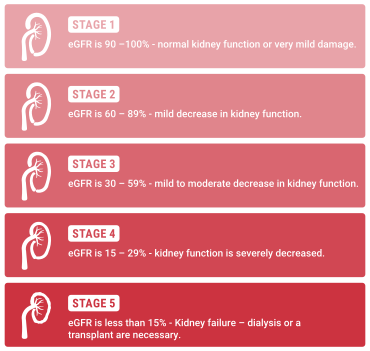
A blood test result that estimates how much blood your kidneys filter in one minute and helps classify CKD into five stages of kidney function.
Stages
As you familiarize yourself with the various types and severity levels of kidney disease, you will come across terms like stages . These measurements play a crucial role in diagnosing the disease’s severity and tailoring an appropriate treatment plan.
CAUSES AND RISK FACTORS
Several factors can increase the risk of developing chronic kidney disease. The most common causes are:


DIABETES

HIGH BLOOD PRESSURE

HEART DISEASE
Other, less common causes include: a family history of kidney disease, autoimmune conditions such as lupus, repeated kidney infections, and inherited conditions like polycystic kidney disease.
SIGNS AND SYMPTOMS
Kidney disease often develops quietly, and many people do not notice any symptoms until kidney function is significantly reduced. Moreover, because the heart and kidneys work closely together, some symptoms can overlap.
You may notice some of the following:


LOSS OF APPETITE

CHANGES IN URINATION
urinating more or less than usual

DECREASED MENTAL SHARPNESS OR CONCENTRATION
SLEEP PROBLEMS

DRY, ITCHY SKIN

MUSCLE CRAMPS
Because the heart and kidneys work closely together, some symptoms can overlap:

CHEST PAIN OR DISCOMFORT

FATIGUE OR WEAKNESS

NAUSEA OR VOMITING

SHORTNESS OF BREATH, EITHER DURING PHYSICAL ACTIVITY OR WHEN LYING DOWN

SWELLING OF THE FEET AND ANKLES
How is Kidney Disease Diagnosed?
Your doctor can perform several simple tests to find out if you have CKD and how advanced it is. The results help determine your stage of kidney function and guide treatment.
When testing for possible CKD or CVD, your healthcare provider will likely start with a routine physical exam. This usually includes measuring weight, height, blood pressure, heart rate, breathing rate, and temperature, to get an overall picture of your health.
Tests used to diagnose kidney disease include:
- Blood tests (Creatinine and eGFR): A blood test measures waste products such as creatinine. High creatinine can mean the kidneys are not filtering well. From this test, your doctor calculates your eGFR, which shows how much blood your kidneys filter each minute and helps determine the stage of CKD (from Stage 1: mild to Stage 5: kidney failure).
- Urine tests: Urine tests look for protein (albumin) in the urine. Protein in the urine is an early sign of kidney damage. The urine albumin-to-creatinine ratio (uACR) is a common test used to detect this.
- Ultrasound: A painless imaging test that shows the size, shape, and structure of your kidneys to detect blockages, cysts, or abnormalities.
- MRI or CT Scan: These provide more detailed images when further evaluation is needed.
- Kidney biopsy: In some cases, a small sample of kidney tissue is taken with a needle to identify the cause and extent of kidney damage.
If your doctor suspects heart problems as well, you may be referred to a cardiologist for further testing.

Treating and Managing Kidney Disease
Although chronic kidney disease and cardiovascular disease are different conditions, they are closely connected and often share the same risk factors. Treating one can help improve the other.


DIABETES, HIGH BLOOD PRESSURE, and HIGH CHOLESTEROL can damage both the heart and the kidneys. Some medications for these conditions help slow down CKD and reduces the risk of heart attacks, stroke, and heart failure.
ANAEMIA, FLUID BALANCE PROBLEMS, and BONE–MINERAL DISORDERS may occur with CKD and require specific treatments.
HEART RHYTHM DISORDERS, HEART FAILURE SYMPTOMS or VASCULAR PROBLEMS may accompany CVD and need tailored therapy.
Addressing these complications helps stabilise overall health and prevents one disease from worsening the other.

These changes support both kidney and heart health and help slow disease progression:
- HEALTHY DIET: Low in salt, sugar, and unhealthy fats.
- REGULAR PHYSICAL ACTIVITY: Adapted to ability and symptoms.
- STOPPING SMOKING: Reduces blood vessel damage and improves oxygen delivery.
- MAINTAINING A HEALTHY WEIGHT: Helps control blood pressure and blood sugar.
Your doctor may prescribe different medications depending on your underlying condition, kidney function, and overall health. These treatments help manage CKD itself, protect the heart, and address complications that may arise. Below are some of the most common types of medications used:
- SGLT2 inhibitors
- Nonsteroidal mineralocorticoid receptor antagonists (MRAs)
- Diabetes medications
- Beta-blockers
- ACE inhibitors (Angiotensin-converting enzyme inhibitors)
- ARBs (Angiotensin receptor blockers)
- Diuretics
- Statins
- Medications for anemia
- Potassium binders
- Vitamins and supplements

For CVD, devices like PACEMAKERS or IMPLANTABLE DEFIBRILLATORS may help the heart. For severe heart failure that does not respond to medication or devices, a HEART TRANSPLANT may be needed.
In CKD, DIALYSIS or a KIDNEY TRANSPLANT may be needed when the kidneys can no longer filter waste.
Questions to Ask Your Doctor
As you embark on your journey of managing chronic kidney disease and or heart disease, engaging in open and insightful discussions with your healthcare provider is crucial. Here are some questions to consider, fostering a collaborative and informed approach to your health:
- What caused my kidney disease?
- What stage of kidney disease do I have?
- What medications can help manage my kidney disease, and what are their risks and benefits?
- How can I slow the progression or lower my risk of developing heart disease or other cardiovascular problems? (for patients with CKD)
- How can I lower my risk of developing kidney disease or slow its progression? (for patients with CVD)
- Are there medications that are safe and appropriate for someone like me with both kidney disease and heart disease?
- What changes should I make to my diet or physical activity routine?
- If my kidneys are not removing water properly, should my fluid intake be adjusted?
- If my fluid intake is restricted, what alternatives do I have to feel hydrated?
- Where can I find reliable, trustworthy resources about CKD and CVD?
- What signs or symptoms should I watch for that mean I should call or seek emergency care?
- Will I eventually need dialysis?
- How can I connect with other patients for support and guidance on living with kidney disease and heart disease?
Additional Resources
Living with Chronic Kidney Disease & Cardiovascular Disease Whiteboard Animation
A short animated video that explains the connection between chronic kidney disease and cardiovascular disease — how the heart and kidneys work together, how one can affect the other, and why early diagnosis, treatment, and support are so important.
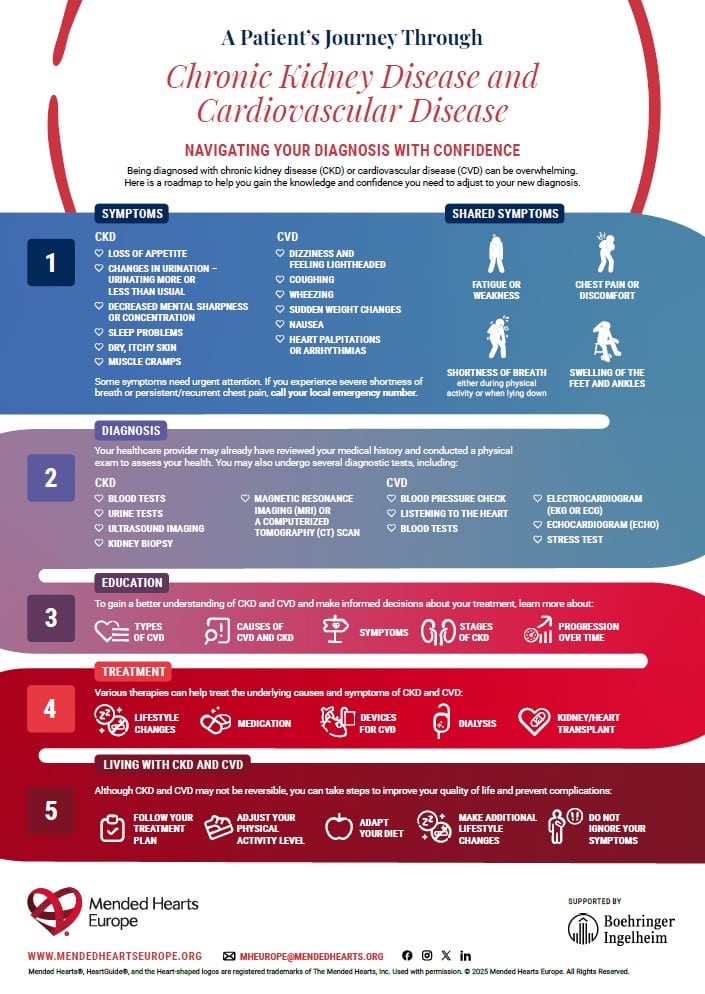
A Patient’s Journey Through Chronic Kidney Disease and Cardiovascular Disease
An illustrated overview showing how chronic kidney disease and cardiovascular disease are linked, and what this can mean for diagnosis, treatment, and long-term management.
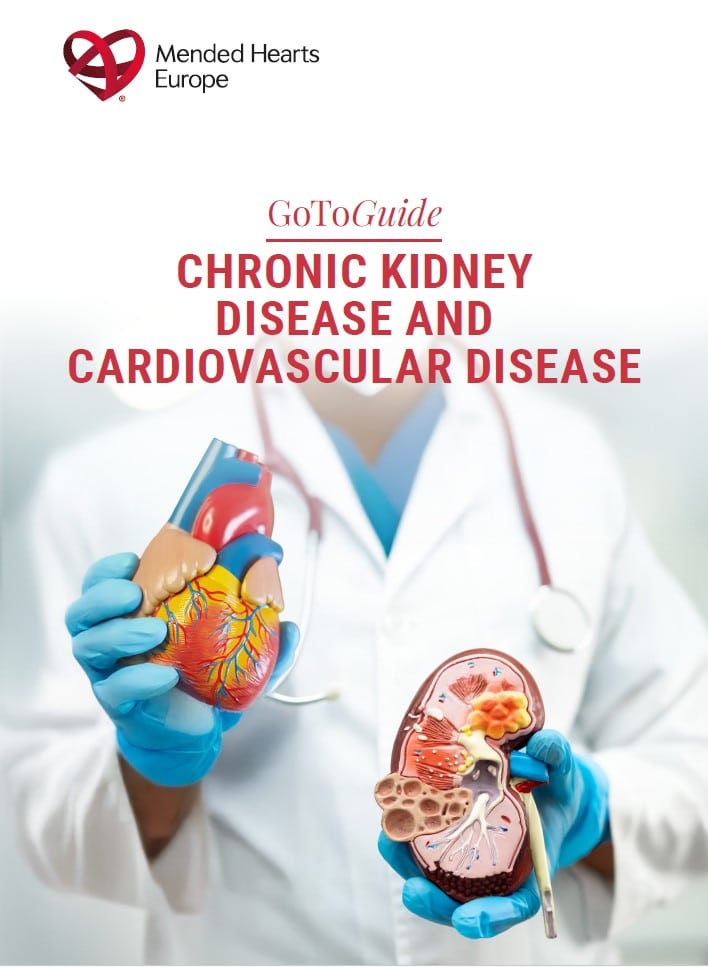
Chronic Kidney Disease and Cardiovascular Disease GoToGuide
A practical, supportive guide to help you and your loved ones understand kidney and cardiovascular disease, how they are diagnosed, treated, and managed — and how caring for one can help protect the other.
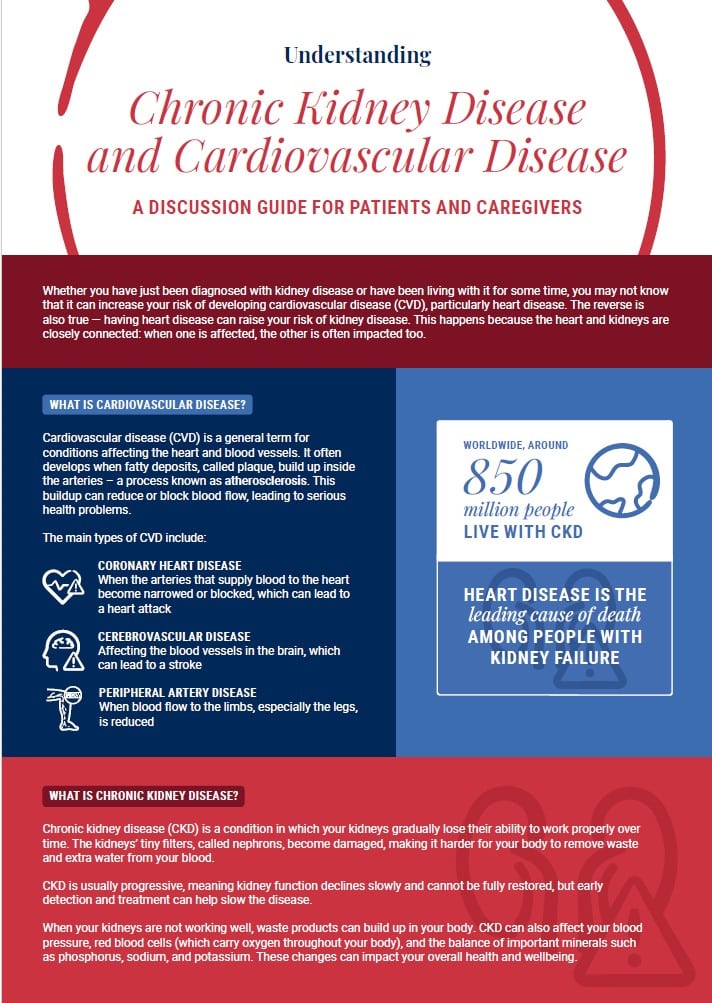
Chronic Kidney Disease and Cardiovascular Disease Discussion Guide
A helpful guide to understand how CKD and CVD are connected and what you can do to protect your heart, kidneys, and overall wellbeing.


