Your body is made of tiny building blocks called cells. Inside most cells is a substance called DNA, which acts like an instruction manual.
What is Gene Therapy?
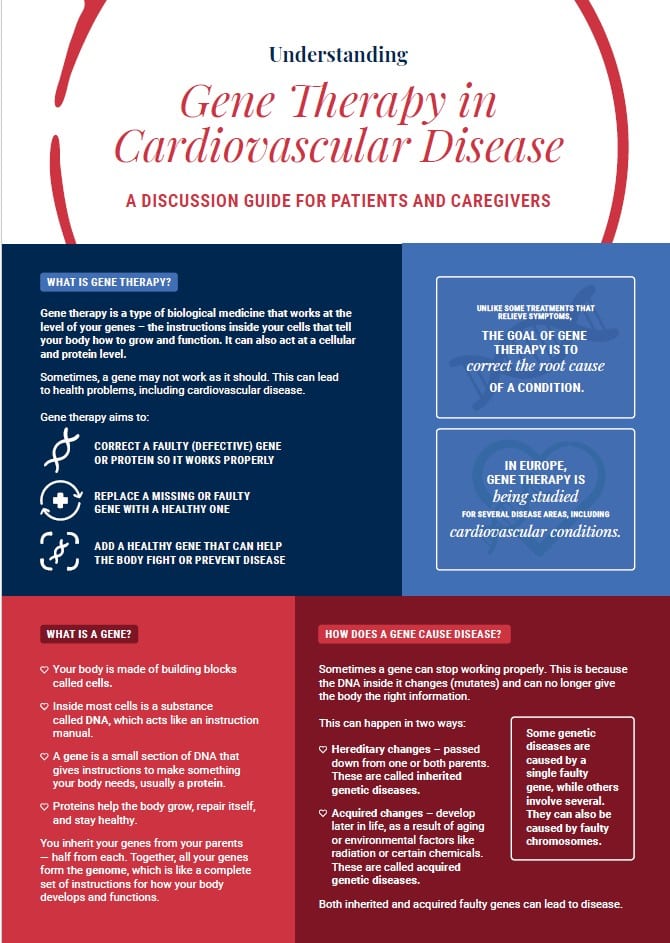
Gene therapy is a type of biological medicine that works at the level of your genes — the instructions inside your cells that tell your body how to grow and function. It can also act at a cellular and protein level.
Sometimes a gene may not work as it should, which can lead to health problems, including cardiovascular disease. Gene therapy aims to correct a faulty (defective) gene or protein, so it works properly, replace a missing or faulty gene with a healthy one, or add a healthy gene that helps the body fight or prevent disease.


Key Definitions
A gene is a small section of DNA that gives instructions to make something your body needs, usually a protein.
You inherit your genes from your parents — half from each. Together, all your genes form the genome, which is like a complete set of instructions for how your body develops and functions.
You inherit your genes from your parents — half from each.
Proteins help the body grow, repair itself, and stay healthy.
How Does a Gene Cause Disease?
Sometimes a gene can stop working properly. This is because the DNA inside it changes (mutates) and can no longer give the body the right information. This can happen in two ways, and both can lead to disease:
HEREDITARY CHANGES
Passed down from one or both parents. These are called inherited genetic diseases.
ACQUIRED CHANGES
Develop later in life, as a result of aging or environmental factors like radiation or certain chemicals. These are called acquired genetic diseases.
GENETIC CARDIOVASCULAR CONDITIONS
Faulty genes can affect many parts of the body, including the heart and blood vessels. Some cardiovascular diseases caused by genetic changes include:


Certain types of cardiomyopathy
Hypertrophic or dilated, that weaken the heart muscle.

Inherited arrhythmia disorders
Like long QT syndrome, which affect the heart’s rhythm.

Familial Hyperchole-sterolemia (FH)
Causing very high LDL cholesterol levels from birth.

Hereditary Transthyretin Amyloidosis (HATTR)
Which can damage the heart and other organs.

Inherited aortic disease
Like Marfan syndrome, affecting the body’s main artery.
These conditions may lead to other serious complications such as:

Heart failure
Dangerous heart rhythms (Arrhythmias)

Heart attack

Sudden cardiac death
NON-GENETIC CARDIOVASCULAR CONDITIONS
In addition to inherited cardiovascular conditions, researchers are also studying whether gene therapy could help in non-genetic heart problems such as:

Heart failure

Ischemic and Non-Ischemic Heart Disease
These experimental therapies aim to:
- Promote new blood vessel growth in the heart muscle.
- Repair or replace damaged heart muscle cells.
- Improve heart function.
While these approaches are still in research stages, some are already being tested in clinical trials, and more are expected in the future. Availability will depend on ongoing research results and regulatory approval for each country.
Types of Gene Therapy
Once the faulty gene has been identified, there are different approaches to treatment.

Gene replacement
A healthy new gene is created in a lab and used to replace the faulty one. The new gene is usually delivered into the body using “carriers” called vectors (which are typically modified viruses that can no longer cause disease). In some cases, your own cells can be collected, genetically modified in a lab, and then returned to your body.

Gene editing
This approach uses advanced tools that can precisely modify and repair the DNA of the faulty gene directly. Think of this as a “cut-and-paste” for your DNA.

Gene silencing (switch off)
This technique targets the DNA instructions that cause a faulty gene to make harmful proteins, reducing or stopping their production.
RISKS AND SIDE EFFECTS
As with any treatment, gene therapy has possible risks or side effects. These may include:


Immune responses
such as chills, fever, headache, low blood pressure, nausea, or vomiting
Unintended effects
if the new gene accidentally interacts with other genes or damages healthy cells or organs.

A risk of infection
especially for patients with weak immune systems.

Unknown long-term effects
more data on other effects is being studied in ongoing clinical trials.
BENEFITS
Possible benefits of gene therapy for cardiovascular disease may include:
- One-time treatment
- Correct the root cause of disease
- Improve heart function
- Improve quality of life
LOOKING AHEAD
Research into gene therapy in cardiology is ongoing. Because this field is still developing, talk to your healthcare team to learn more about:
- clinical trials that might be relevant to your condition
- existing or newly approved treatments in your country
- reliable resources to help you stay informed
- patient networks that can help you navigate your journey with cardiovascular disease
Questions to Ask Your Doctor
- Am I eligible for any ongoing clinical trials for my condition?
- What are the potential benefits and risks of these treatments?
- What is the mode of delivery of this therapy?
- Will I need immunosuppression?
- How would gene therapy or a clinical trial affect my daily life?
- Are there long-term follow-ups or monitoring required after treatment?
- How can I stay updated on new therapies or approvals in my country?
- Should my family members consider genetic testing as well?
- Are there patient support resources for individuals undergoing gene therapy or taking part in clinical trials?
Additional Resources

Gene Therapy Discussion Guide – German
A clear, patient-friendly guide designed to help you understand what gene therapy is, how it may be used in cardiovascular disease, and what questions to discuss with your doctor.

Gene Therapy Discussion Guide – Spanish
A clear, patient-friendly guide designed to help you understand what gene therapy is, how it may be used in cardiovascular disease, and what questions to discuss with your doctor.
Gene Therapy Discussion Guide
A clear, patient-friendly guide designed to help you understand what gene therapy is, how it may be used in cardiovascular disease, and what questions to discuss with your doctor.